FREE SHIPPING OVER $99*
A luxury wine cellar is far more than a decorated room with wine racks; it is a precisely engineered, climate-controlled environment designed for one purpose: to protect a valuable collection as it matures. The success of this environment hinges on technical decisions that must be made long before construction begins. Overlooking these details can lead to costly failures, from mold and mildew to ruined wine.
This guide provides architects, builders and homeowners with 10 critical questions to answer before starting a wine cellar project. Addressing them up front will help you create a space that is both beautiful and technically sound, protecting your investment for decades. IWA operates a full-service design center and serves as your expert partner, guiding you from initial concept and CAD design through product selection and installation support.
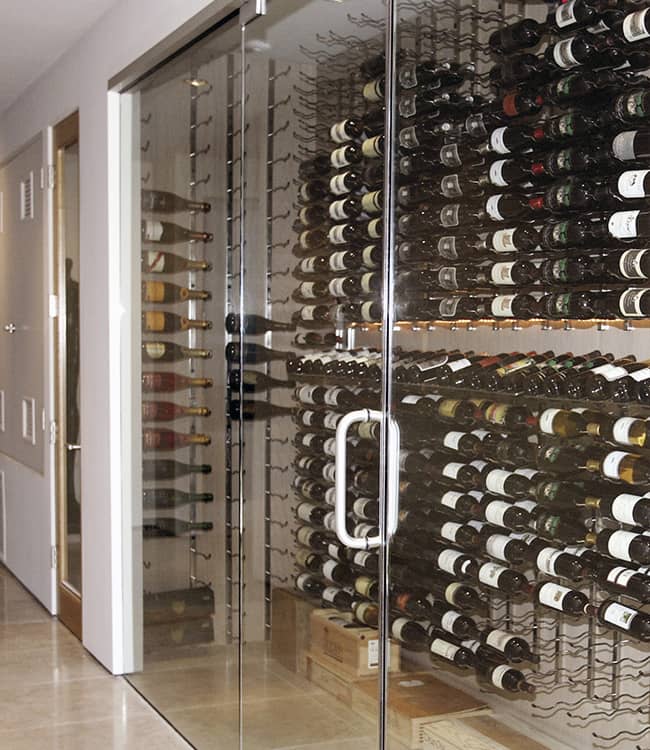
1. Where Is the Optimal Location for the Cellar?
The physical location of your wine cellar is the single most significant factor influencing its construction complexity and long-term energy costs. An ideal location minimizes exposure to heat, light and vibration. Basements are traditionally favored because their subterranean placement generally provides a cool, stable ambient temperature.
If you will be installing an active refrigeration system (as opposed to passive cooling), the basement’s cooler temperature reduces the cooling system’s workload. It is still important to insulate all the walls, and it is imperative to install a vapor barrier to keep the cellar airtight, because concrete does not provide a high level of insulation and it is porous. If the cellar is not airtight, it will cause moisture problems for the cooling unit and lead to premature failure. A wine cellar cooling unit is not a dehumidifier; it is designed to be installed in a properly constructed, airtight space with a correctly installed vapor barrier.
Locations near heat sources like furnaces, laundry rooms or walls receiving direct sunlight will require more robust insulation and a more powerful cooling unit to compensate for the higher thermal load. Like basements, these locations will also require a vapor barrier to ensure that the cellar is airtight. Construction details for the thermal envelope are covered in Question 2.
How IWA Helps
Our design consultants help you analyze potential locations within your home as part of our initial consultation process. We assess factors like ambient temperature, humidity and proximity to mechanical systems to provide a clear understanding of the challenges and opportunities each space presents. This foundational assessment informs the entire project scope and ensures your cellar is built on solid ground.
2. How Will We Create a Proper Thermal Envelope?
A wine cellar must be completely isolated from the rest of the home’s environment. This is achieved by creating a continuous, sealed thermal envelope. Proper construction typically requires a minimum of R-19 insulation in the walls and R-30 in the ceiling to reduce temperature exchange. Critically, a 6-mil vapor barrier must be installed on the “warm” side of the insulation (the exterior of the cellar walls and ceiling). Controlling moisture is essential to prevent condensation and mold growth within the wall cavities, which can compromise both the structure and the wine collection.
How IWA Helps
We remove the guesswork from this critical step by providing clear, actionable instructions and detailed specifications for framing, insulation and vapor barrier placement. By providing this guidance during the wine cellar planning and cooling unit selection process, we help ensure the room is prepared correctly before any expensive equipment or finishes are installed.
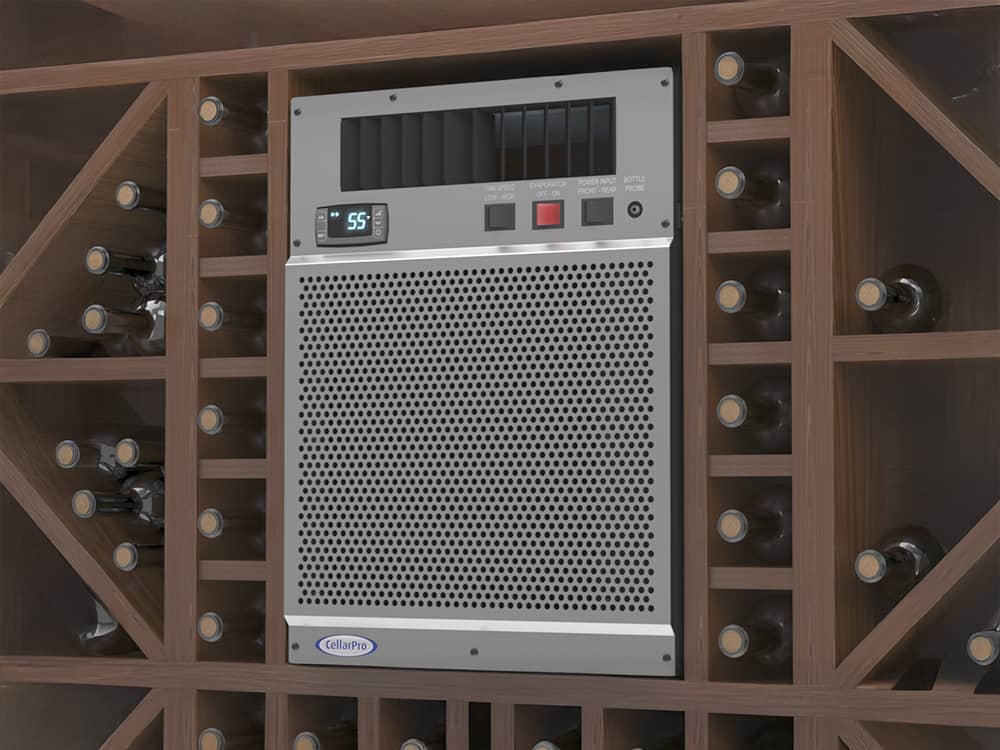
3. What Is the Correct Cooling System Type?
Selecting the right wine cellar cooling system requires a balance of performance, aesthetics and budget. The decision between a self-contained, split or ducted system depends on the cellar’s size, location and construction. Self-contained units, like the CellarPro 1800 series, are often simpler to install but require ventilation into an adjacent space. Split systems offer silent in-cellar operation by placing the noisy condenser and compressor remotely. Ducted systems also allow the equipment to be located remotely from the cellar, in a location such as a mechanical room or attic where its noise will not disturb living spaces.
The system’s capacity must be determined by a precise thermal load calculation, which considers the cellar’s volume, insulation values, glass exposure, desired cellar temperature and ambient temperatures, among other factors. An undersized unit will struggle and fail prematurely; an oversized unit will short cycle and may not properly manage humidity.
How IWA Helps
We offer an online thermal load calculator that provides recommended units based on the inputs you submit. Our specialists are trained to guide you through our sizing process for your specific space. Based on this analysis, we recommend the correctly sized and most appropriate system from our comprehensive range of units from leading manufacturers. This ensures your cooling unit runs efficiently without being overworked, maintaining a stable temperature for years to come.
4. Is the Wine Cellar Door Exterior-Grade?
The cellar door is the most frequently used component and the most common point of failure in a thermal envelope. A standard interior door is not sufficient. The door must be exterior-grade with a solid core, full weather-stripping and an automatic door bottom to create a tight seal that prevents air leakage. Any glass within the door or surrounding walls should be dual-pane and tempered to provide higher insulation (R-value) and help prevent condensation.
How IWA Helps
We offer a range of custom-built wine cellar doors in materials like Mahogany and Poplar that are specifically engineered for this application. Our doors are constructed to the correct thickness and include all necessary sealing components to integrate seamlessly with the cellar’s thermal envelope, ensuring both beauty and performance.
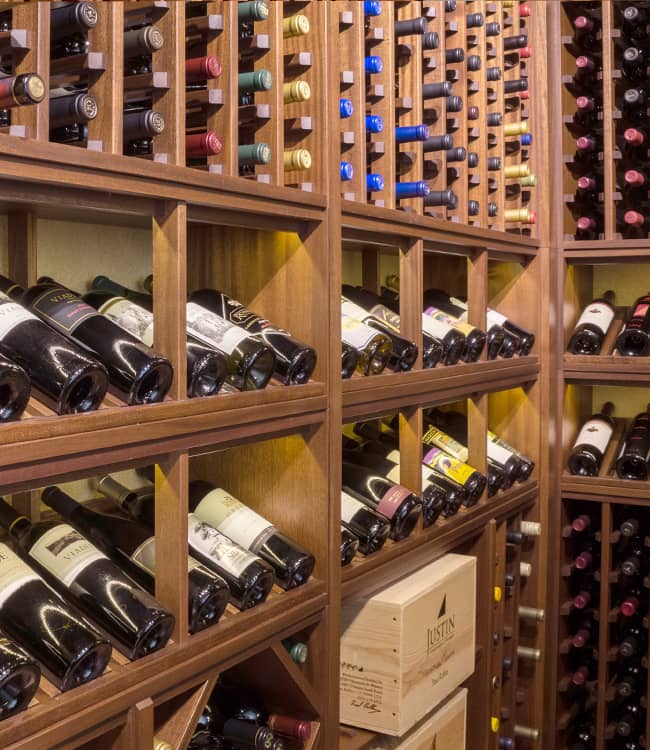
5. What Is the Racking Strategy for the Collection?
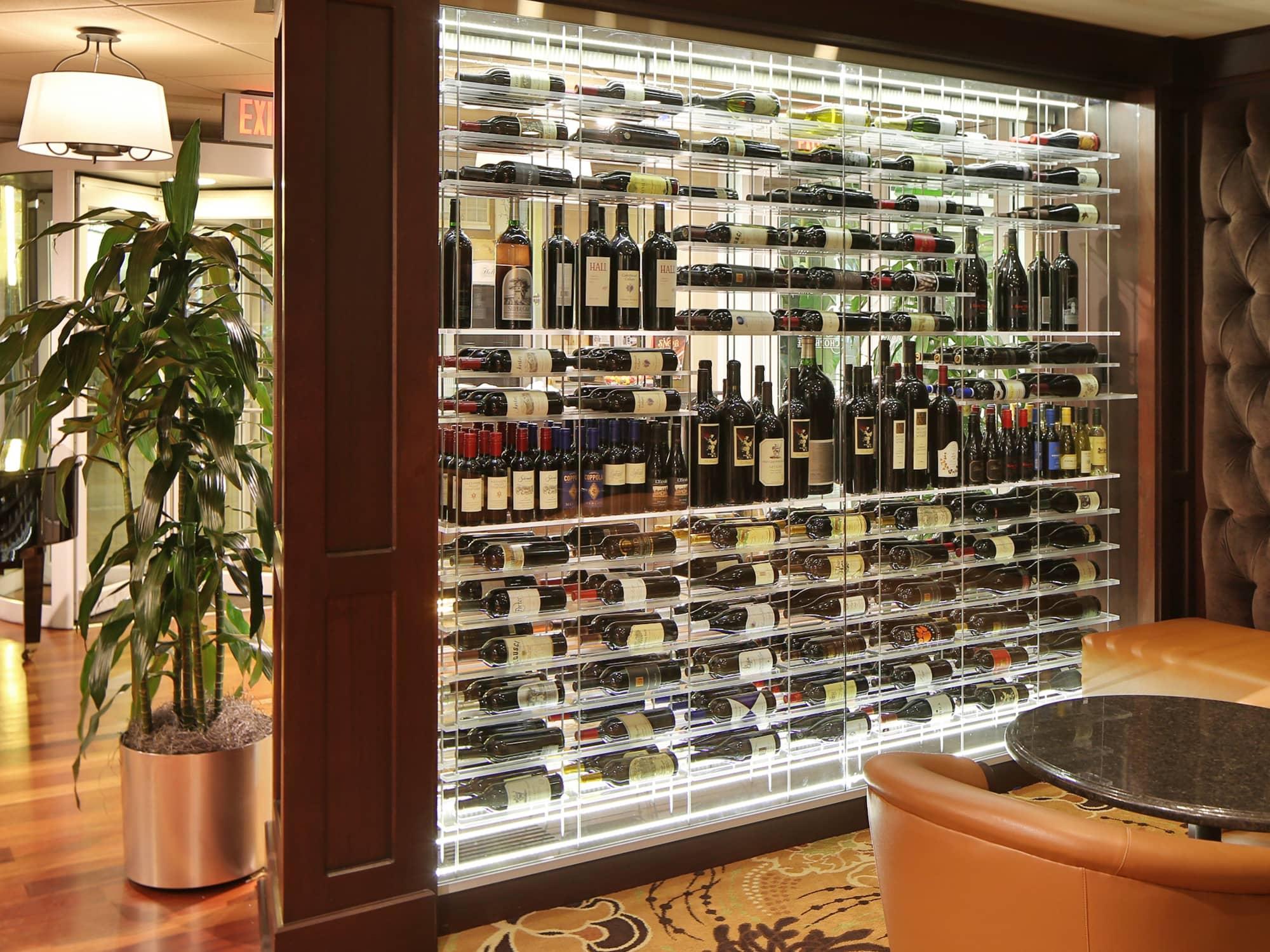
The racking system defines the cellar’s functionality and aesthetic. The design must balance total bottle capacity, display goals and the diversity of your collection. Considerations should be made for storing standard 750 ml bottles, larger formats like magnums and champagnes, and bulk storage in cases or bins. Materials range from the classic warmth of wood to modern metal wine racks that offer minimalist, label-forward displays.
A thoughtful racking plan also anticipates future growth, allows comfortable access to bottles and creates focal points for prized labels.
How IWA Helps
Our CAD design process is invaluable for visualizing your racking strategy. We can generate multiple layouts showing different configurations of our extensive wine rack collections, allowing you to see exactly how your collection will be stored and displayed. Whether you prefer modular kits for a growing collection or fully custom millwork, we help you design a solution that maximizes your space and matches your collecting style.
6. How Will Lighting Be Managed to Protect the Wine?
Wine is vulnerable to damage from both heat and ultraviolet (UV) light. Exposure to UV rays can trigger chemical reactions that create unpleasant aromas and flavors, a condition often referred to as “light-struck” wine. For this reason, all lighting inside a wine cellar must be low-heat and UV-free. LED lighting is the industry standard, as it emits virtually no UV radiation and minimal heat. All fixtures should also be rated for use in a high-humidity environment to ensure longevity and safety.
How IWA Helps
Our design team incorporates a complete lighting plan into your cellar design. We can specify appropriate low-voltage LED fixture types, from accent lighting for display rows to general illumination, and map out their placement. This integrated approach ensures you can create dramatic visual effects that highlight your collection without compromising the climate or the wine itself.
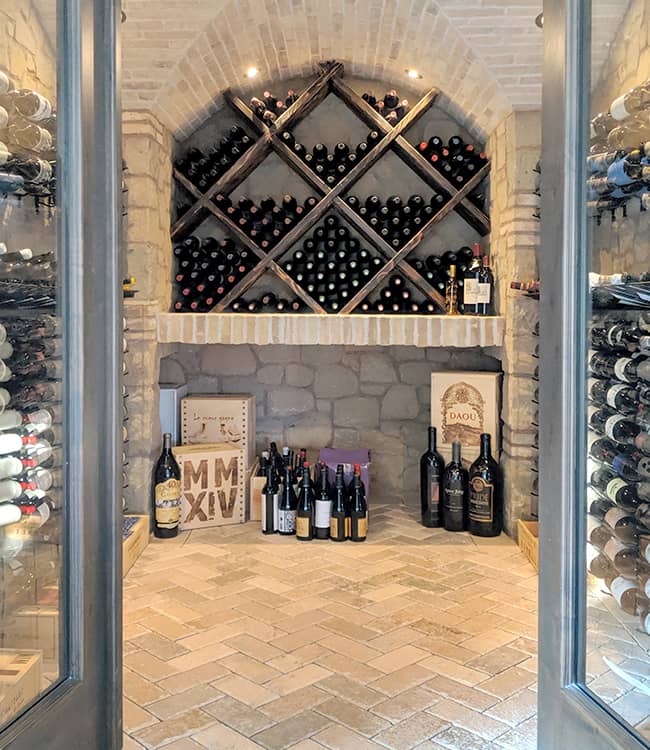
7. What Are the Right Materials for Flooring and Walls?
All materials used inside the cellar must be resistant to a cool, damp environment to prevent mold and mildew. Materials like carpet, standard drywall and certain untreated woods are unsuitable. Recommended finishes include naturally resistant materials like tile, slate, sealed concrete or engineered products designed for high-humidity areas. Using moisture- and mold-resistant materials is a key strategy when building in environments where condensation can occur.
How IWA Helps
We guide you to cellar-safe materials that combine durability with high-end aesthetics. Our consultants can advise on the best finishes to match your design vision and the cellar’s technical requirements. We also offer unique options, such as wine cellar flooring made from the staves and infusion pieces of recycled wine barrels, which adds authentic character without risk.
8. How Will Humidity Be Controlled?
Maintaining proper humidity is just as important as temperature. The ideal relative humidity for a wine cellar is generally between 55 and 70 percent. If the air is too dry, corks can dry out from the outside, shrink and compromise their seal, leading to oxidation. This is especially critical for wines intended for long-term aging. While all refrigeration systems inherently remove some moisture from the air, drier climates may require supplemental humidification to stay in the optimal range.
How IWA Helps
During our consultation, we assess your local climate and the specific conditions of your cellar to determine if a supplemental humidifier is necessary. Advanced ducted CellarPro cooling units can be ordered with an integrated humidification system, which automates the process and maintains the ideal level of moisture to protect your corks.
9. How Will the Cellar Integrate with a Smart Home?
For valuable and irreplaceable wine collections, continuous monitoring provides essential peace of mind. Modern wine cellar cooling units can be equipped with remote monitoring systems and alarms that connect to your home network. These systems can send alerts directly to your smartphone or email if the temperature or humidity deviates from your set points, allowing you to address a potential equipment issue before it can damage your wine.
How IWA Helps
We stay at the forefront of cellar technology and can specify network-compatible thermostats and controls that integrate with common smart home platforms. Our specialists help you select a unit that offers the level of monitoring, control and security your collection deserves.

10. Who Is the Central Point of Contact for the Project?
A custom wine cellar project is a complex undertaking that involves multiple specialized trades, including framing, electrical, HVAC and finish carpentry. Without a central point of contact who understands how each component must integrate, miscommunications can lead to critical and costly mistakes. For example, an electrician may not know the specific power requirements for the cooling unit, or a drywall installer may not understand the correct application of a vapor barrier.
How IWA Helps
This is our core value. IWA acts as your dedicated design and procurement partner for racking, cooling, lighting, flooring, doors and glass panels for your cellar. We ensure that every product specified — from the cooling unit and cellar door to the racking and lighting — is designed to work together as a cohesive system. We provide ongoing support for your builder and installers, serving as the expert resource they can turn to throughout the process.
Start Your Design with an Expert Partner
Answering these ten questions is the first step toward building a wine cellar that is both beautiful and technically flawless. Proper planning is the best insurance against the common issues that can degrade or ruin a wine collection. With over 40 years of experience, IWA has the expertise to guide you through every decision and help you avoid costly mistakes.
Do not leave your project to chance. Leverage our comprehensive design services and extensive product knowledge to ensure your vision becomes a reality. Contact an IWA Design Specialist today to discuss your project and begin planning your perfect wine cellar.
Or Call Our Design Center at (800) 527-4072 x1