FREE SHIPPING OVER $99*
With over 40 years of experience designing and building custom wine cellars in Portland and nationwide, we specialize in creating optimal conditions for storing, aging and displaying fine wine collections. We design custom wine cellars and manufacture Le Cache wine cabinets and CellarPro cooling units, combining extensive industry expertise with advanced engineering resources. Our team is ready to help you build a properly constructed cellar that can withstand Portland's intense humidity and cold winters.
Humidity Control
Proper 60-70% relative humidity is essential for preserving wine, especially in humid environments like Portland. A carefully installed vapor barrier and humidity control system are vital.
Temperature Fluctuations
Cool, constant temperatures in the range of 55-60°F are ideal for storing and aging wines. Specialized wine refrigeration equipment is designed to maintain correct temperatures and conditions in hot, cold and temperate environments.
Airtight Construction
Refrigerated wine cellars should be built with a vapor barrier and exterior-grade doors to ensure that the cellars are airtight when the doors are closed. This is especially important in humid environments like Portland.
Basement Conversion
Basements typically offer cool, stable temperatures, but if yours isn’t cool enough for wine storage, refrigeration may be necessary. In that case, all concrete surfaces must be covered with a vapor barrier and insulated because concrete is porous and has poor thermal properties.
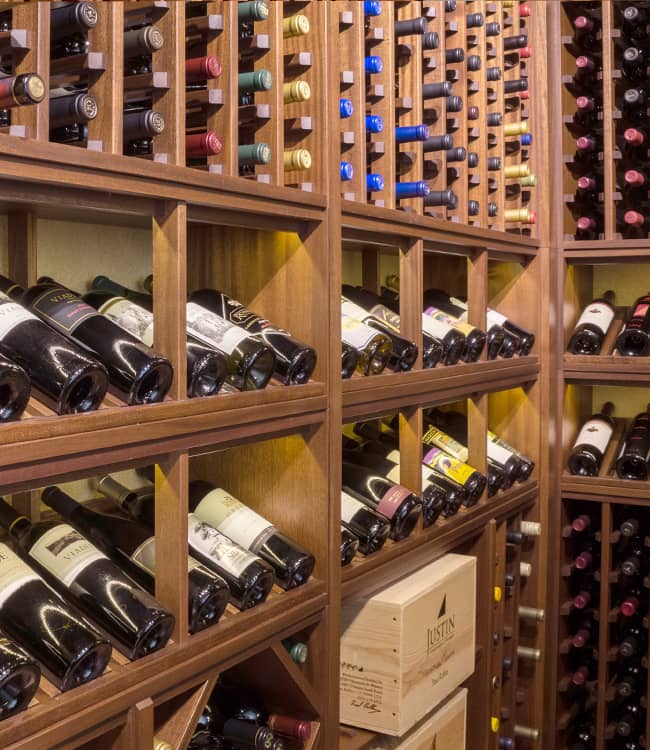
Your Wine Deserves the Best
To compensate for warm summers and high humidity, Portland wine cellars need to be constructed as a highly insulated, airtight space with a flawless vapor barrier wrapped around the exterior.
Once the sealed environment is ready, a climate control system needs to be properly configured and installed for optimal efficiency. It is important not to rush through construction, since the performance of the cellar must be stable long-term in a challenging climate.
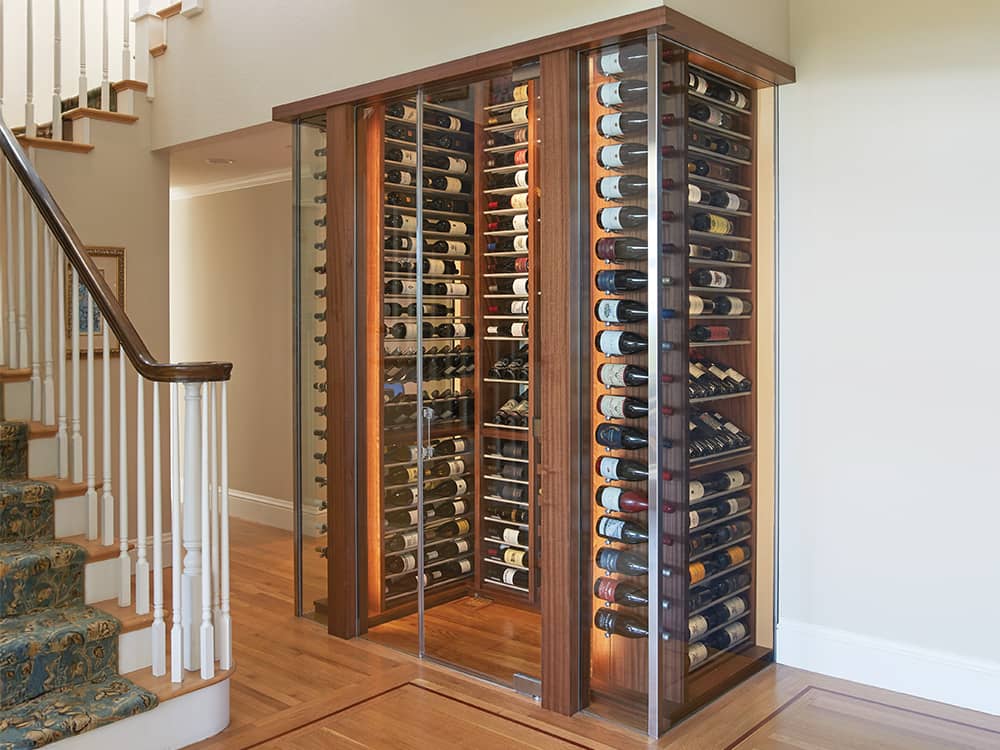
The Importance of Proper Wine Storage
All refrigerated wine cellars should be constructed with the best and thickest insulation available. This reduces the cellar's thermal load, which in turn decreases the cooling unit's runtime, power consumption and energy bills.
Correctly sizing the cooling unit is especially important in climates that drop below 55˚F. Along with the size of the cellar, factors such as the type and amount of insulation, the desired cellar temperature and the surrounding exterior temperature all significantly impact the cellar's thermal load.
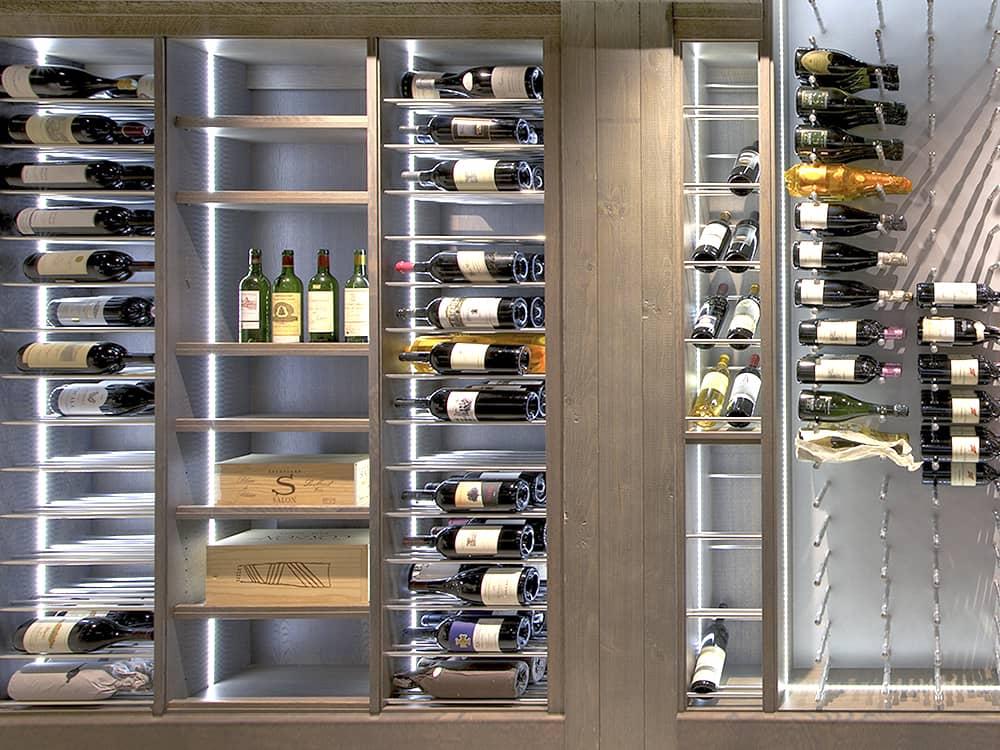
Showcase Your Wine Collection
Display your bottles with sleek, label-forward metal wine racks that can be mounted on walls or installed as free-standing columns attached to the floor and ceiling. Add LED lighting to highlight display rows and backlighting to set the mood inside your cellar.
For a classic cellar vibe, nothing compares to the warmth of wood wine racks. Available in a variety of species like mahogany, redwood, alder, and oak, wood wine racks can be finished in a choice of water-based stains, and sealed with lacquer to protect the wood.
Over 40 Years of Experience
We share your passion for wine! With over 40 years of experience designing and building custom wine cellars, we understand the care and dedication required to preserve fine wine collections.
Whether you're converting a closet, renovating a basement, or adding a glass-enclosed wine cellar to your living room, we've done it all—and we're ready to bring our expertise to your project.
We source only the highest-quality components through our network of leading suppliers, ensuring your dream cellar is built with the best materials. If you encounter any challenges, we’re here to support you every step of the way.
Will my cellar require a cooling unit in Portland?
Portland's cold winters, warm summers and high humidity make it difficult to maintain a stable temperature (low to mid-60s) with stable humidity year-round. Therefore, a wine cooling unit is necessary in most custom wine cellars in Portland.
How do I prevent mold and mildew in Portland's humid conditions?
Condensation will form in cellars that are not properly sealed, causing water damage, growing mold on wood racking and affecting wine bottles. This can be prevented by adding high R-value insulation, wrapped with an airtight vapor barrier on all walls (including the ceiling and floor.)
How do I find the right cooling unit for my wine cellar?
Many factors influence the correct sizing and selection of a cooling unit. The size of the cellar is important, but other factors are equally important, including:
- The type of construction and materials used in the cellar
- The amount and type of glass
- The presence (or absence) of a vapor barrier and airtight seal
- The ambient temperature outside the cellar
- The desired temperature inside the cellar
- Ducting (if applicable)
For example, a 100-cubic-foot cellar with R19 insulation will have different cooling needs than a 100-cubic-foot cellar with glass on three walls.
If your unit is too small, it will struggle to maintain the desired temperature in your cellar, and will burn out sooner than desired from being overworked.
For accurate sizing, we recommend using a sizing calculator provided by one of the major cooling unit manufacturers. (TIP: Use the sizing calculator of the manufacturer whose cooling unit you intend to purchase. Different manufacturers have different sizing conventions, and they don’t necessarily cross reference.)
Our resource article Choosing the Right Cooling System provides further information on this topic. If you are building a wine cellar within a compact space, visit Small Custom Cellars to learn more.
I have a basement, is that the best place for a wine cellar?
If you have a basement, it typically will have cooler and less variable temperatures as compared to above-ground spaces. The cooler temperature will reduce the size of the cooling unit required for the space, all else being equal. Remember that concrete walls will need a vapor barrier and insulation, because concrete is porous and has poor thermal properties. Learn more in our article about Building a Basement Cellar.
What kind of flooring is best for a wine cellar in Portland's potentially damp conditions?
Avoid carpet, due to mold risk. Instead, choose flooring such as stone, brick, tile or faux hardwood laminate. In a naturally humid environment, recycled barrel stave and hardwood floors can warp. If you choose a wood floor, make sure the planks are stored for a week or more inside the cellar environment, before installing. Read our article on How to Choose the Right Flooring for your Wine Cellar to learn more.
